Pest Control Service in Columbus provides systematic biological remediation and physical exclusion to halt indoor biological vectors and structural damage. Homeowners facing sudden scratch marks behind wall cavities or insect swarms near historic foundations find immediate resolution with WillowForge Pest Care.

Pest Control Service company in Columbus is an architectural and biological defense practice that diagnoses pest entries, eliminates breeding reservoirs, and seals exterior structural gaps to safeguard residential and commercial properties across Franklin County.
Every service reflects the same meticulous attention to detail, whether it's a single job or a larger pest control service project across Columbus.
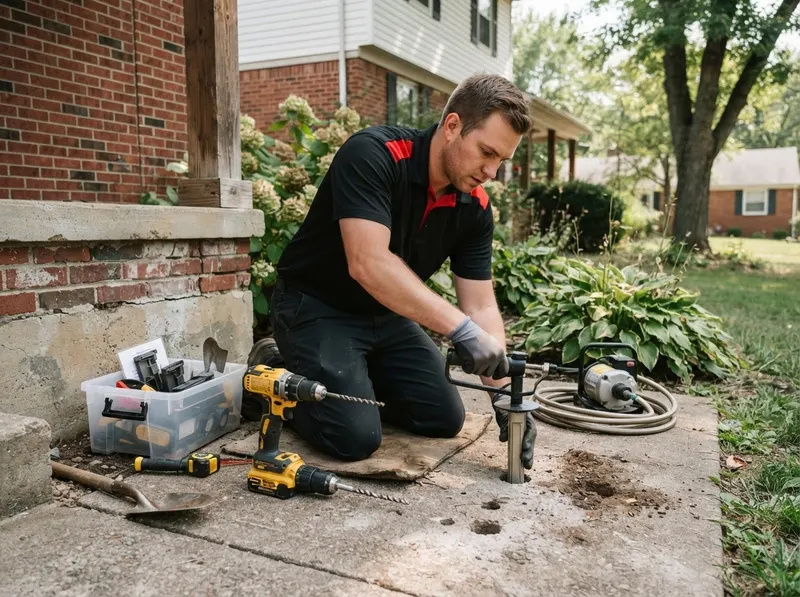
Eastern subterranean termites (Reticulitermes flavipes) cause severe structural framing damage throughout Ohio's river corridors by excavating hidden channels within damp structural timbers. Remediation begins with a comprehensive moisture assessment and sounding inspection of basement sills, floor joists, and subflooring elements. Technicians trench continuous 6-inch by 6-inch linear soil channels around exterior foundation perimeters to deposit non-repellent liquid termiticides, adhering to chemical distribution benchmarks specified by the USDA Forest Service . In finished basements and slab-on-grade rooms, precision core-drilling through exterior concrete porches or interior expansion joints introduces sub-slab barrier layers. Technicians install tamper-resistant cellulose monitoring stations flush with turf grades around exterior perimeters to identify colony movements before worker termites encounter structural framing. Every remediation plan includes photographic moisture mapping and detailed inspection logs tracking long-term timber integrity.
Get a quote →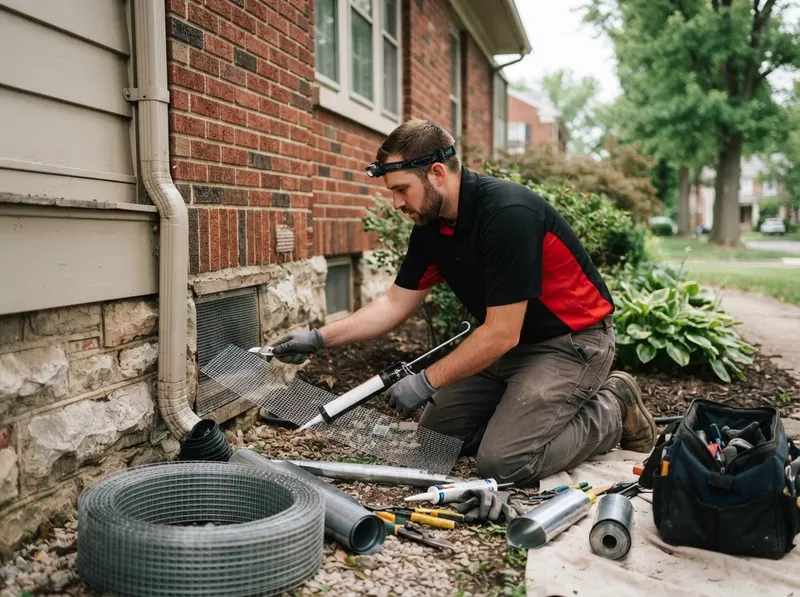
Norway rats and white-footed mice exploit architectural junctions, air conditioning line chases, and foundation settling cracks to access interior living quarters. Technicians conduct systematic perimeter surveys of the structure from roofline eaves down to basement window wells. Interior populations are eliminated using commercial snap traps and mechanical captures placed along verified travel lines inside locked, child-safe monitoring stations. Technicians reject open chemical baiting inside living areas to eliminate dead rodent decomposition inside drywall cavities. Physical exclusion involves securing structural openings exceeding 6 millimeters with 24-gauge copper mesh, stainless steel hardware cloth, and metal-reinforced polyurethane elastomeric sealants. Entry points around gas mains, dryer vents, crawlspace access hatches, and garage door weather seals receive custom-fitted aluminum flashing. Damaged attic insulation laden with biological droppings is extracted, followed by sanitizing bio-enzyme mist treatments to neutralize airborne pheromone scents.
Get a quote →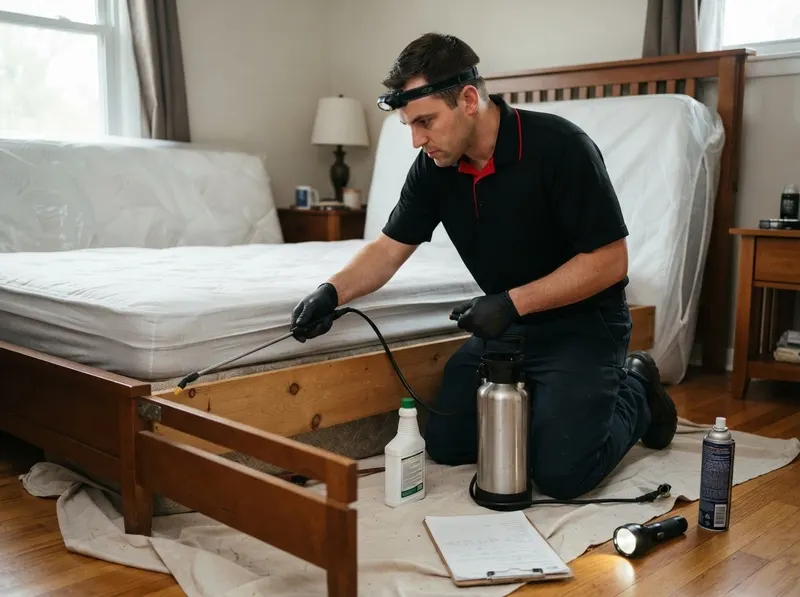
Cimex lectularius infestations disrupt residential bedrooms, multi-family housing complexes, and hospitality spaces by nesting inside mattress tufts, headboard joints, and baseboard crevices. Technicians execute methodical visual and HEPA-vacuuming diagnostics across high-risk sleeping perimeters. Systematic elimination deploys direct convective thermal systems that elevate ambient room temperatures above 122 degrees Fahrenheit (50 degrees Celsius), maintaining lethal heat saturation throughout interior wall cavities, upholstered fabrics, and box spring assemblies according to scientific protocols maintained by the Ohio State University Department of Entomology . For situations requiring non-thermal intervention, technicians apply micro-crystallized amorphous silica dust into electrical faceplates, carpet tack strips, and crown molding recesses. This inorganic desiccant absorbs epicuticular wax layers from bed bugs, causing rapid dehydration across all developmental instars while remaining completely inert to domestic pets.
Get a quote →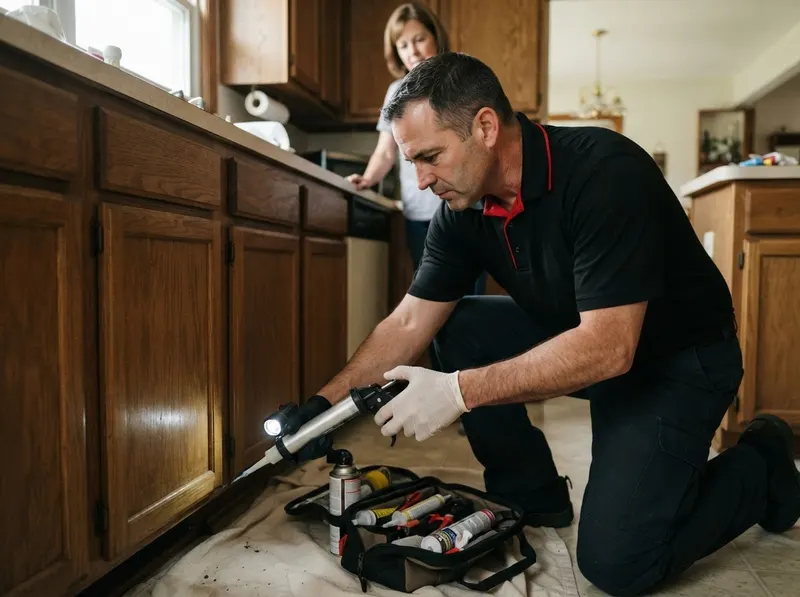
German cockroaches (Blattella germanica) and American cockroaches (Periplaneta americana) exploit dark, high-humidity microclimates behind kitchen dishwashers, commercial grease traps, and residential plumbing chases. Technicians deploy calibrated vacuum units equipped with certified HEPA filters to immediately pull adult aggregations, nymphs, and ootheca egg cases out of motor compartments and cabinet hinges. Treatment proceeds with precision micro-applications of high-palatability gel bait matrices containing juvenile hormone mimics and metabolic disruptors, placed along interior structural corners rather than broad surface shelves. Technicians install insect growth regulators that inhibit chitin synthesis, terminating reproductive lifecycles among newly molted nymphs. Comprehensive sanitation inspections outline moisture control, sealing gaps around under-sink plumbing collars, and eliminating accessible grease deposits to restore hygienic conditions in compliance with standards from the Food Safety and Inspection Service .
Get a quote →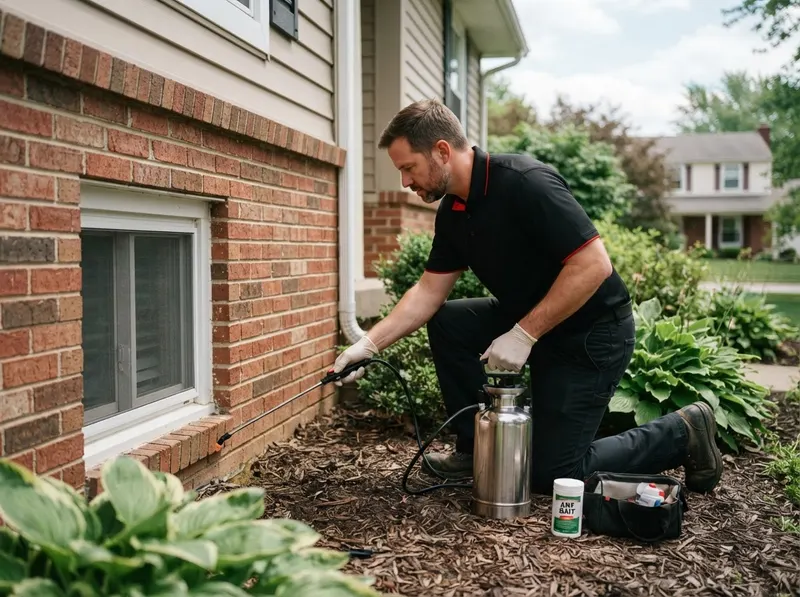
Wood-destroying black carpenter ants (Camponotus pennsylvanicus) and invasive odorous house ants establish satellite colonies within moisture-softened roof eaves, window headers, and bathroom wall cavities. Technicians map structural worker trails outdoors to identify master parent colonies located in landscape timbers, rotting tree stumps, or adjacent firewood stacks. Technicians use precision non-repellent transfer chemistry along exterior foundation perimeters and interior foraging avenues. Foraging workers unknowingly pass active compounds throughout the subterranean colony via trophallaxis, neutralizing reproductive queens within subterranean chambers. Where active galleries weaken interior structural framing, technicians perform direct drill-and-injection applications utilizing pyrethroid foams into void cavities. Perimeter treatments finish with silicone seals applied along brick veneer expansion channels, door thresholds, and siding weep joints to block trailing re-entry pathways.
Get a quote →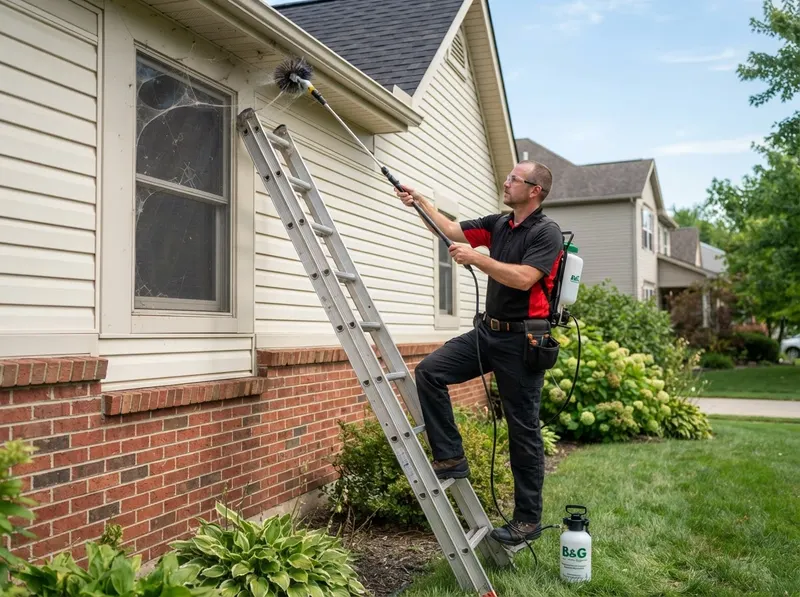
Yellow sac spiders, wolf spiders, and cellular cobweb spiders target residential eaves, decorative exterior lighting fixtures, and unfinished basement corners where nocturnal insect prey congregates. Technicians conduct physical mechanical sweeping across exterior roof overhangs, window screens, and patio framing using specialized telescoping brushes treated with botanical repellents. Technicians dismantle intact egg sacs to prevent spring nursery dispersals around exterior porches. Exterior foundation walls receive a targeted residual micro-encapsulated perimeter band extending two feet upward and three feet outward across adjacent topsoil. By resolving underlying outdoor lighting insect draws and eliminating crawling prey populations like sowbugs and silverfish, interior spider migrations drop dramatically without requiring pervasive indoor chemical aerosols.
Get a quote →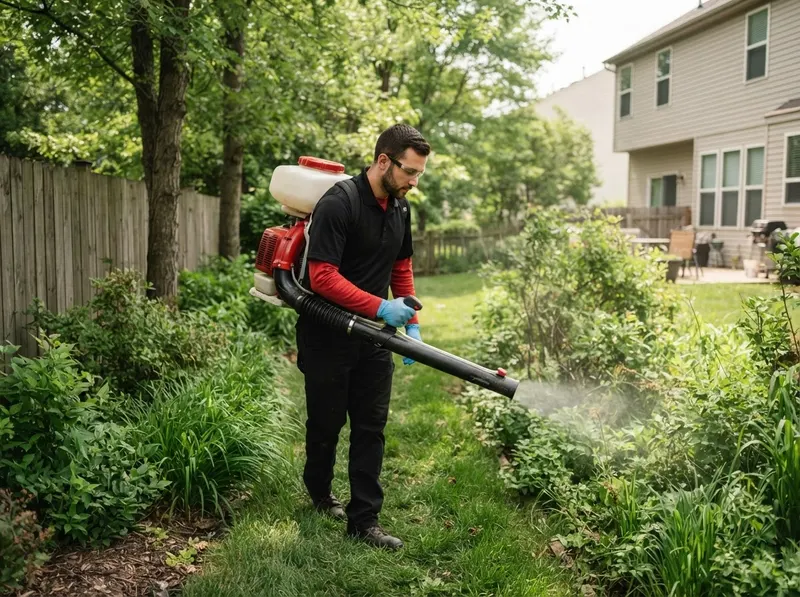
Culex and Aedes albopictus mosquitoes develop rapidly within stagnant drainage ditches, clogged roof gutters, and shaded turf perimeters between late May and mid-September. Field technicians map localized breeding sources across residential yards, identifying poorly graded turf swales, decorative pond catchments, and corrugated downspout extensions. Non-potable standing water features receive biological larvicides formulated with Bacillus thuringiensis israelensis (BTI), a naturally occurring soil bacterium that targets mosquito larvae without harming fish, domestic pets, or birds. Technicians treat the undersides of dense ornamental shrubbery, shaded perimeter fencerows, and deck footings with targeted botanical misting applications that target daytime resting adults. This dual-phase approach suppresses local mosquito populations while minimizing non-target impacts on beneficial pollinators.
Get a quote →Ctenocephalides felis populations spread rapidly throughout residential carpets, upholstered furniture fabrics, and hardwood flooring gaps following contact with untreated pets or wildlife. The biological challenge lies within the resilient pupal stage, which resists standard surface insecticides inside protective silken cocoons. Technicians address this lifecycle through a dual-mechanism treatment combining fast-acting adulticides with insect growth regulators like pyriproxyfen. Technicians provide detailed mechanical preparation instructions, including whole-floor vacuuming to stimulate pupal emergence immediately prior to localized applications. Treatment solutions penetrate deep into carpet backing, pet sleeping pads, and subfloor cracks. This prevents emerging larvae from completing their final molt, interrupting the reproductive cycle within 14 days without relying on volatile airborne fumigation.
Get a quote →You get a firm, itemized quote for your pest control service before any work begins, no surprises, no pressure.
Careful prep, tidy work, and a full cleanup when we are done. We treat your home and belongings like our own.
The same trusted, background-checked team from the first call to the final check.
Selecting the proper treatment protocol depends on the specific biological target, the age of the structure, and the physical vector path. If dealing with perimeter invasions like odorous house ants, yellow sac spiders, or seasonal clover mites, choose quarterly exterior barrier maintenance; if confronting active interior wood destruction from carpenter ants or subterranean termites, choose localized pressure injection and perimeter liquid termiticide trenching. The operational trade-off centers on upfront mechanical labor versus continuous chemical management: quarterly exterior barrier treatments establish continuous surface protection around window frames, weep holes, and sill plates to stop pests before interior invasion, requiring minimal disruption inside living spaces.
Conversely, reactive interior remediation demands comprehensive preparation, moving furniture away from baseboards, physical void flushing, and HEPA vacuuming to extract active biological colonies. For rodent activity involving deer mice or Norway rats inside attic insulation or drop ceilings, choose physical architectural exclusion paired with mechanical closed-box trapping over continuous interior poison baiting. Relying solely on interior rodenticide baits risks foul odors from carcasses decomposing within drywall voids, whereas architectural exclusion permanently seals pipe chaseways, sill gaps, and roof junctions with 16-gauge galvanized steel mesh.
When managing stinging insect risks like German yellowjacket nests embedded behind exterior fascia boards, select localized aerosolized freeze applications with manual cavity extraction rather than exterior dust broadcasting, thereby preventing defensive insect swarming toward outdoor living patios.
Every project gets a firm, written price after a free on-site visit. Ranges below for orientation.
Tell us about your pest control service job and we'll send a clear, written quote, usually the same day. Or just call and talk to a real Columbus pro.
(513) 812-8019
Properties across Franklin County face diverse environmental pressures created by central Ohio's glacial till geology, high-moisture river basins, and distinct architectural variations. Homes built throughout Victorian Village, German Village, and Olde Towne East feature structural brick masonry, rubble-stone foundations, and historic lumber framing that naturally develop settlement micro-fissures over decades. These historic entry points allow subterranean termites to construct mud tubes directly from damp baseline soils into structural sills, while Norway rats use basement utility penetrations during late autumn temperature drops. In neighborhoods like Clintonville and Worthington Hills, deeply wooded ravine systems and mature oak canopies sustain aggressive carpenter ant colonies and seasonal Culex mosquito breeding pools within shaded drainage swales. Meanwhile, suburban properties in Upper Arlington, Bexley, and Grandview Heights border local waterways like the Olentangy and Scioto Rivers, subjecting walkout basements and crawlspaces to high humidity levels that attract silverfish, subterranean termites, and yellow sac spiders. Public parks like Goodale Park, the Franklin Park Conservatory, and the Scioto Mile demonstrate how municipal green spaces and river corridors serve as natural biological transit routes across urban zones. WillowForge Pest Care designs localized pest management protocols that adapt directly to the specific soil mechanics, architectural construction materials, and environmental conditions of these Columbus neighborhoods.
Free estimates for Columbus & the surrounding area.
 WillowForge Pest Care