Targeted cockroach remediation addresses acute residential infestations by halting insect reproduction rather than relying on repellent baseboard sprays. Repellent sprays disperse Blattella germanica deeper into wall…
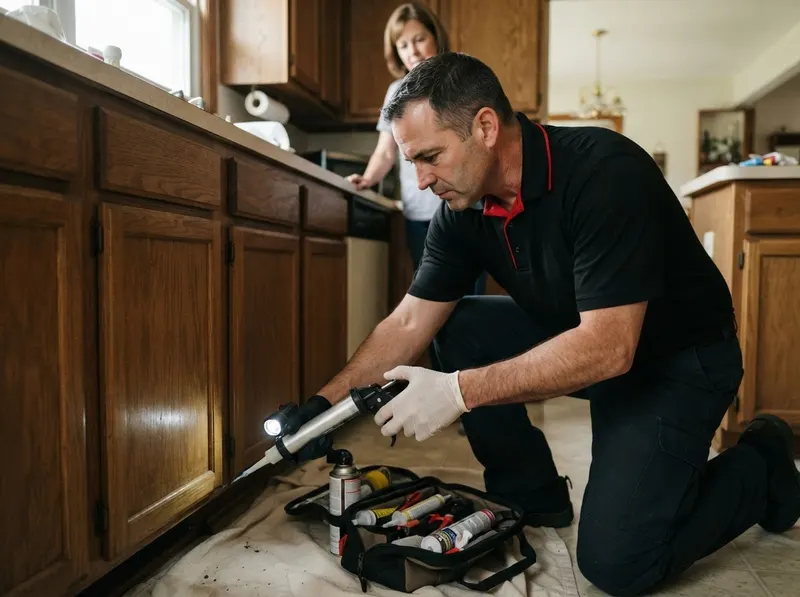
Targeted cockroach remediation addresses acute residential infestations by halting insect reproduction rather than relying on repellent baseboard sprays. Repellent sprays disperse Blattella germanica deeper into wall voids and shared utility chases, compounding the issue. Instead, technical eradication pairs non-repellent abamectin or dinotefuran gel baits with synthetic juvenile hormone mimics, known as EPA-registered insect growth regulators. This dual-action protocol stops juvenile nymphs from maturing into reproductive adults while drawing foraging roaches out of motor housings and under-sink plumbing gaps. Treatment areas dry within 15 minutes, remaining pet-conscious and isolated from contact surfaces according to CDC environmental health guidelines.
In dense Columbus neighborhoods such as Victorian Village, German Village, and the Short North Arts District, century-old multi-family structures share common brick party walls and lath-and-plaster plumbing stacks. In these structures, German roaches move between units along moist pipe penetrations. For single-family homes in Upper Arlington, Clintonville, and Worthington Hills, stone or block basements often host larger American or Oriental cockroaches drawn to floor drains and perimeter soil moisture. WillowForge Pest Care pairs biological treatments with structural exclusion, adhering to standards from the National Pest Management Association. Technicians seal sub-cabinet drywall voids with silicone acrylic and backer rod, denying nesting insects access to kitchen pantries.
Eradication follows a three-step clinical sequence. First, technicians monitor infestation density using pheromone focal traps, cross-referencing moisture levels using guidelines from the Ohio State University Extension. Second, targeted micro-droplet baits are placed in hidden structural voids, motor compartments, and hinge assemblies, preventing food-prep surface contamination as outlined by the U.S. Food and Drug Administration. Third, technicians return between days 14 and 21 to evaluate bait consumption, check nymph development against the life-cycle data recorded by the Entomological Society of America, and apply expanding polymer foam along utility runs. This comprehensive process follows the Ohio Department of Agriculture structural pest division rules, avoiding indefinite monthly chemical subscriptions.
Every job gets a firm, written price after a free on-site visit.
Tell us about your targeted cockroach remediation job in Columbus and we'll send a clear, written quote, usually the same day.
 WillowForge Pest Care